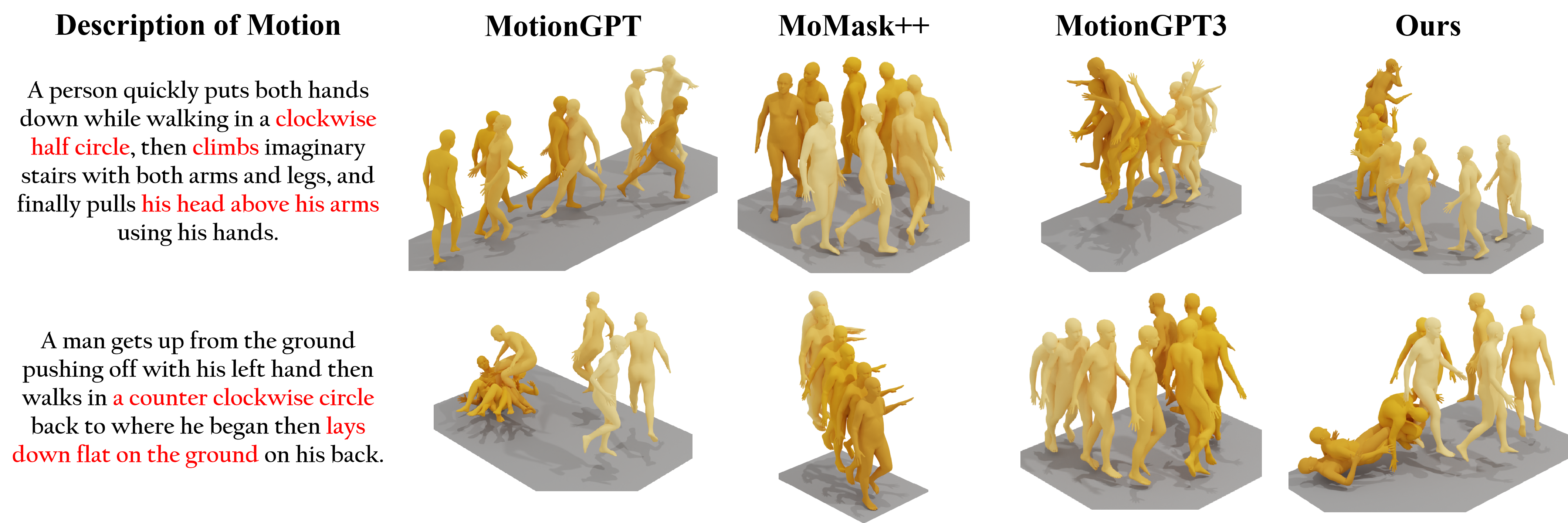
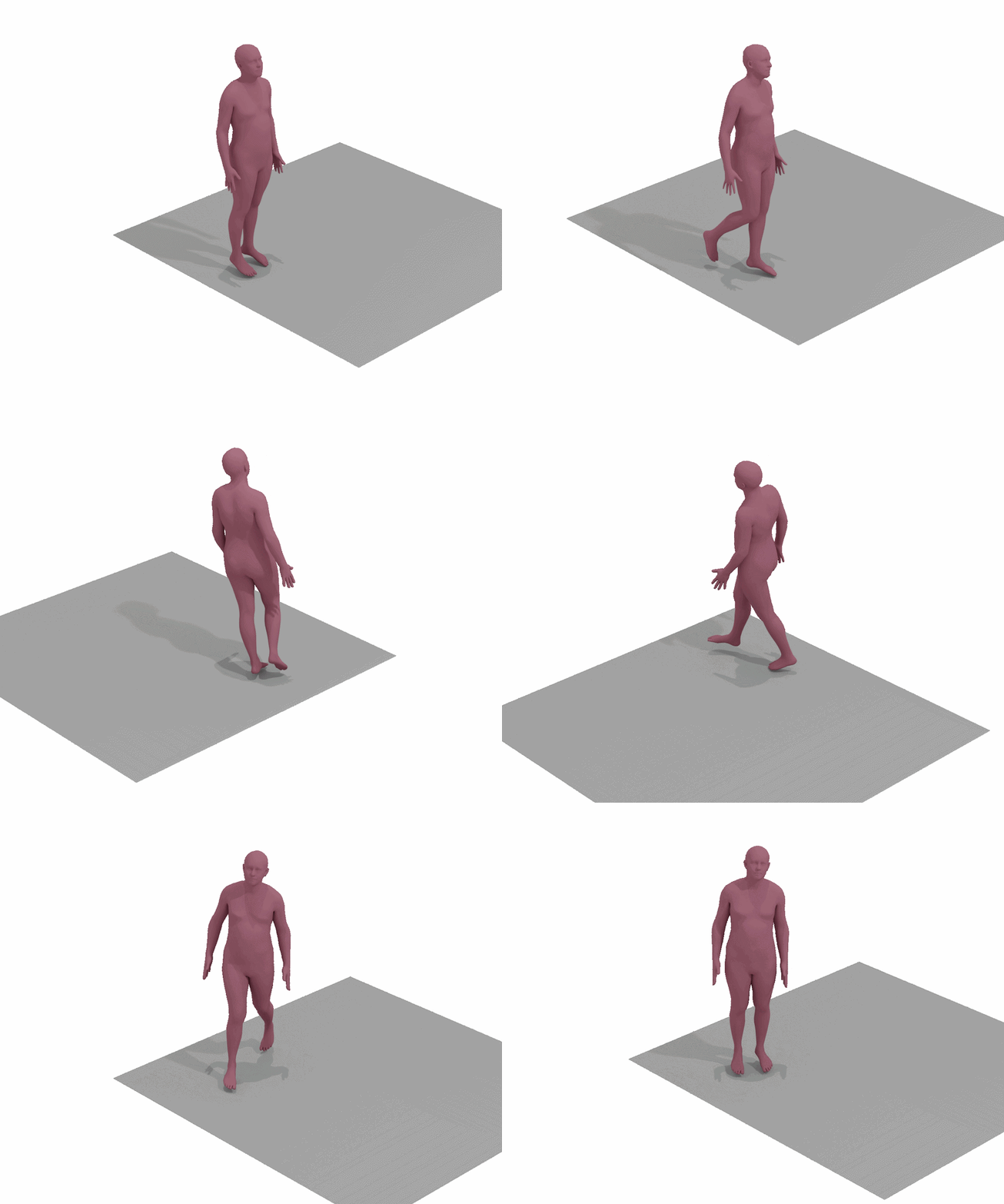
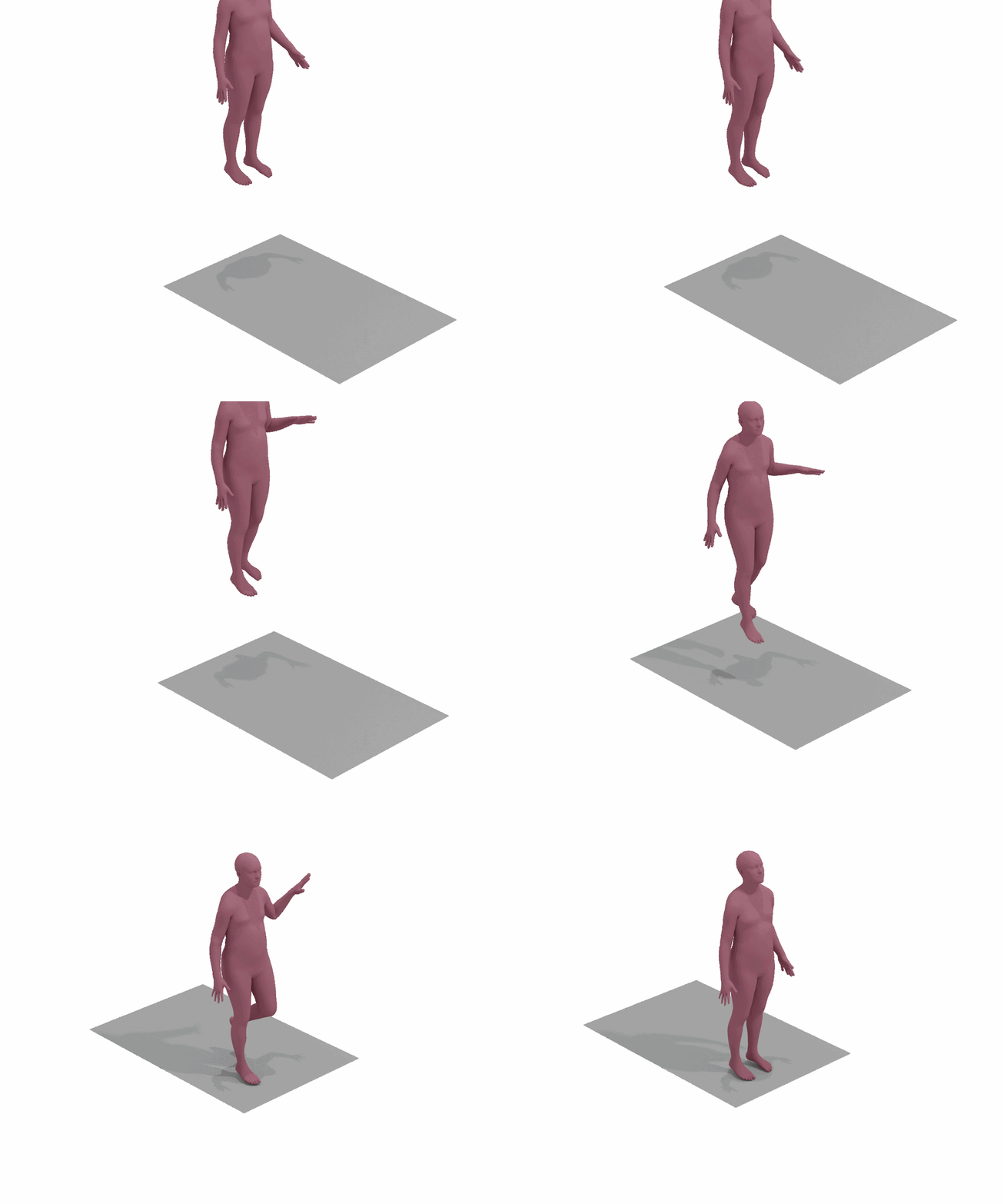
Fine-grained alignment between text and motion across challenging prompts.
Text-to-motion generation is driven by learning motion representations for semantic alignment with language. Existing methods rely on either continuous or discrete motion representations. However, continuous representations entangle semantics with dynamics, while discrete representations lose fine-grained motion details. In this context, we propose FlowCoMotion, a novel motion generation framework that unifies both treatments from a modeling perspective. Specifically, FlowCoMotion employs token-latent coupling to capture both semantic content and high-fidelity motion details. In the latent branch, we apply multi-view distillation to regularize the continuous latent space, while in the token branch we use discrete temporal resolution quantization to extract high-level semantic cues. The motion latent is then obtained by combining the representations from the two branches through a token-latent coupling network. Subsequently, a velocity field is predicted based on the textual conditions. An ODE solver integrates this velocity field from a simple prior, thereby guiding the sample to the potential state of the target motion. Extensive experiments show that FlowCoMotion achieves competitive performance on text-to-motion benchmarks, including HumanML3D and SnapMoGen.
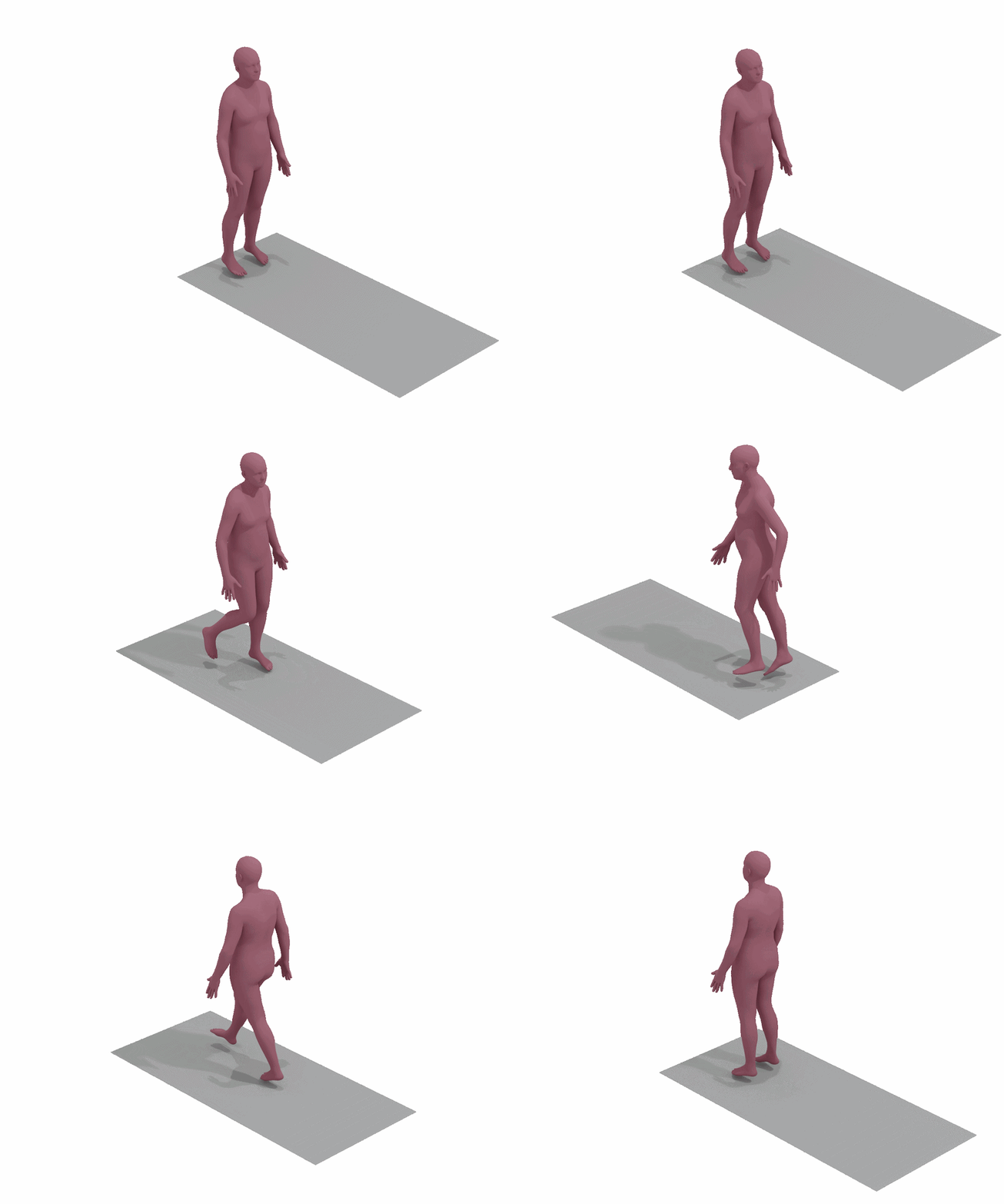
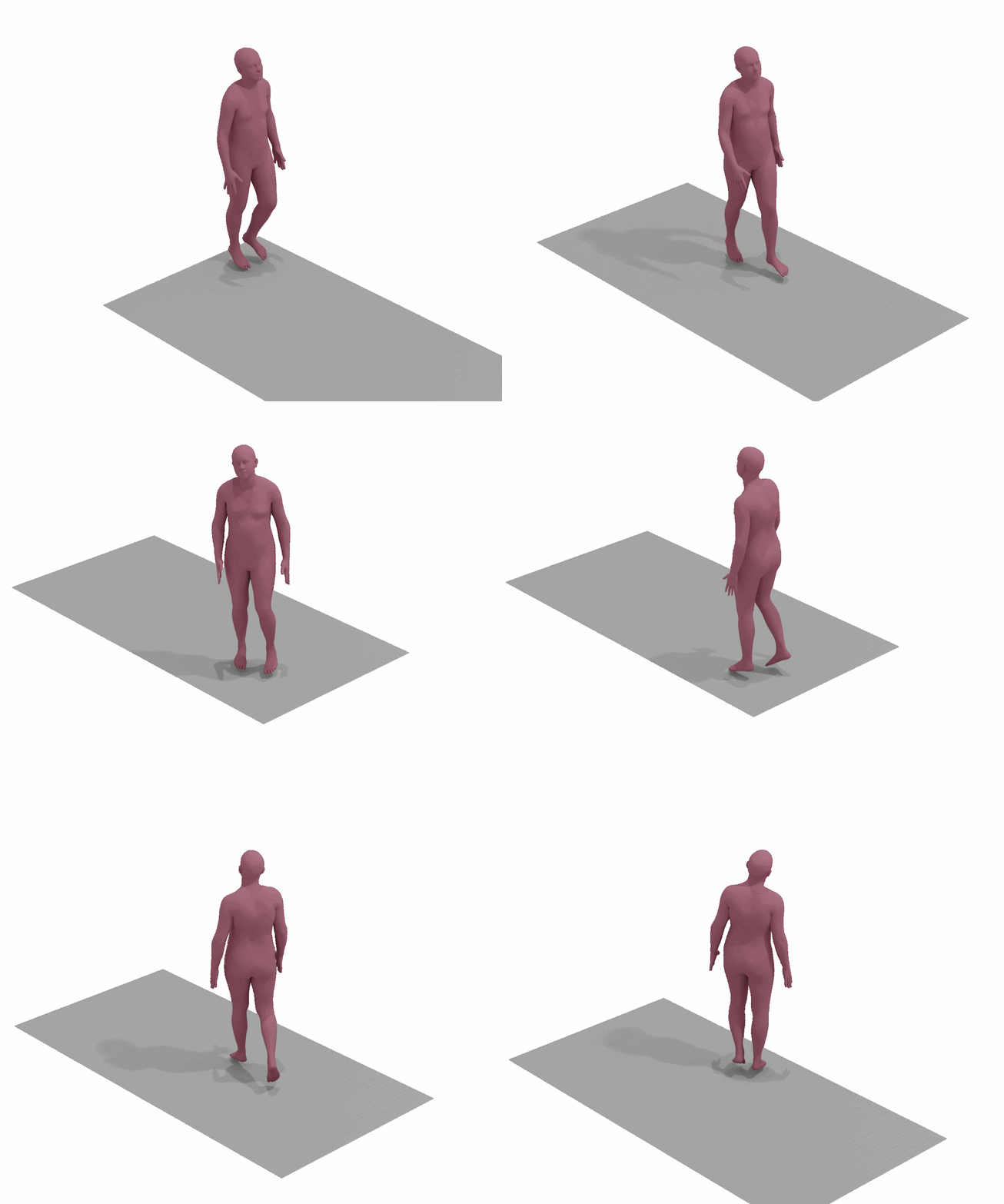
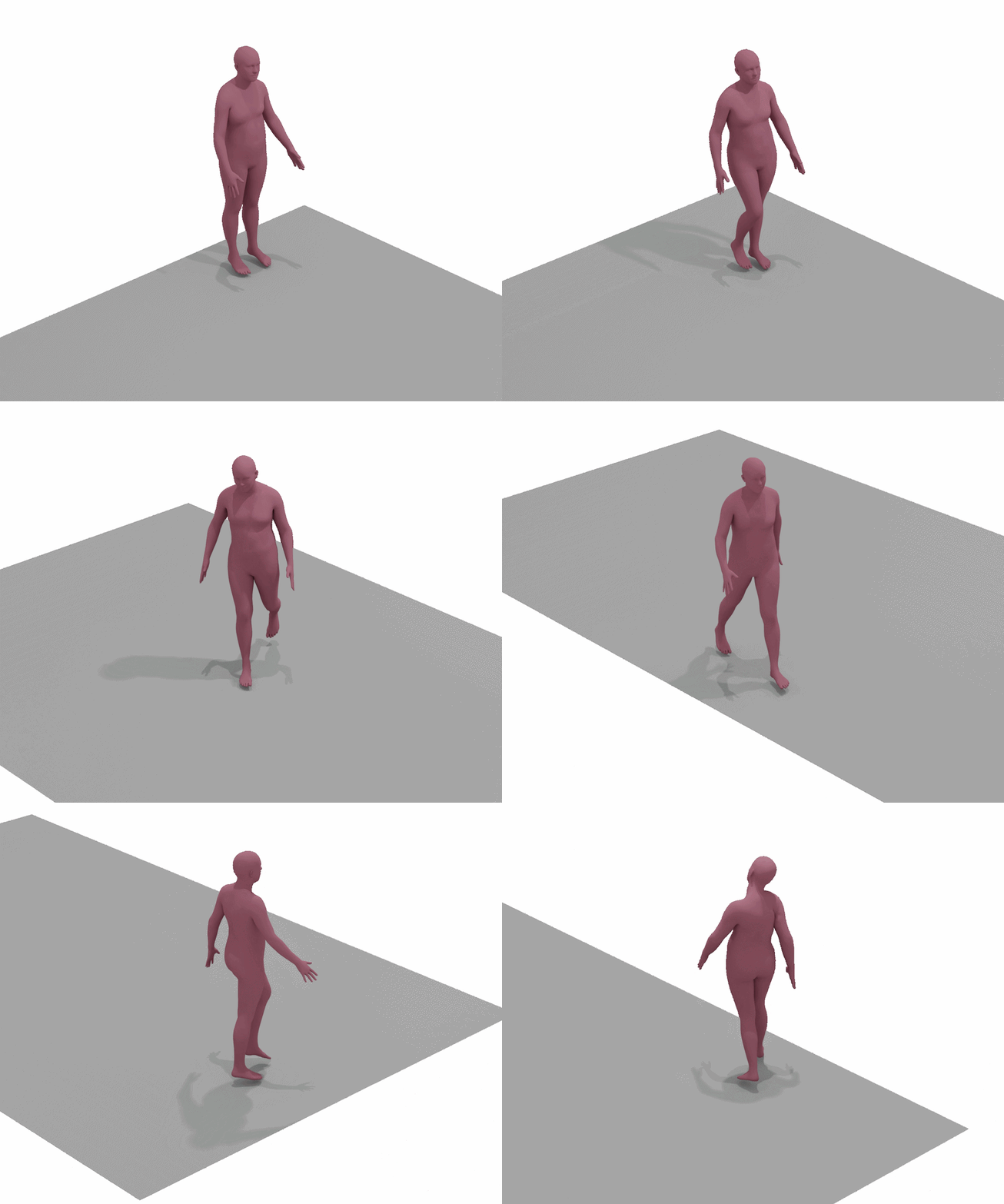
Fine-grained alignment between text and motion across challenging prompts.
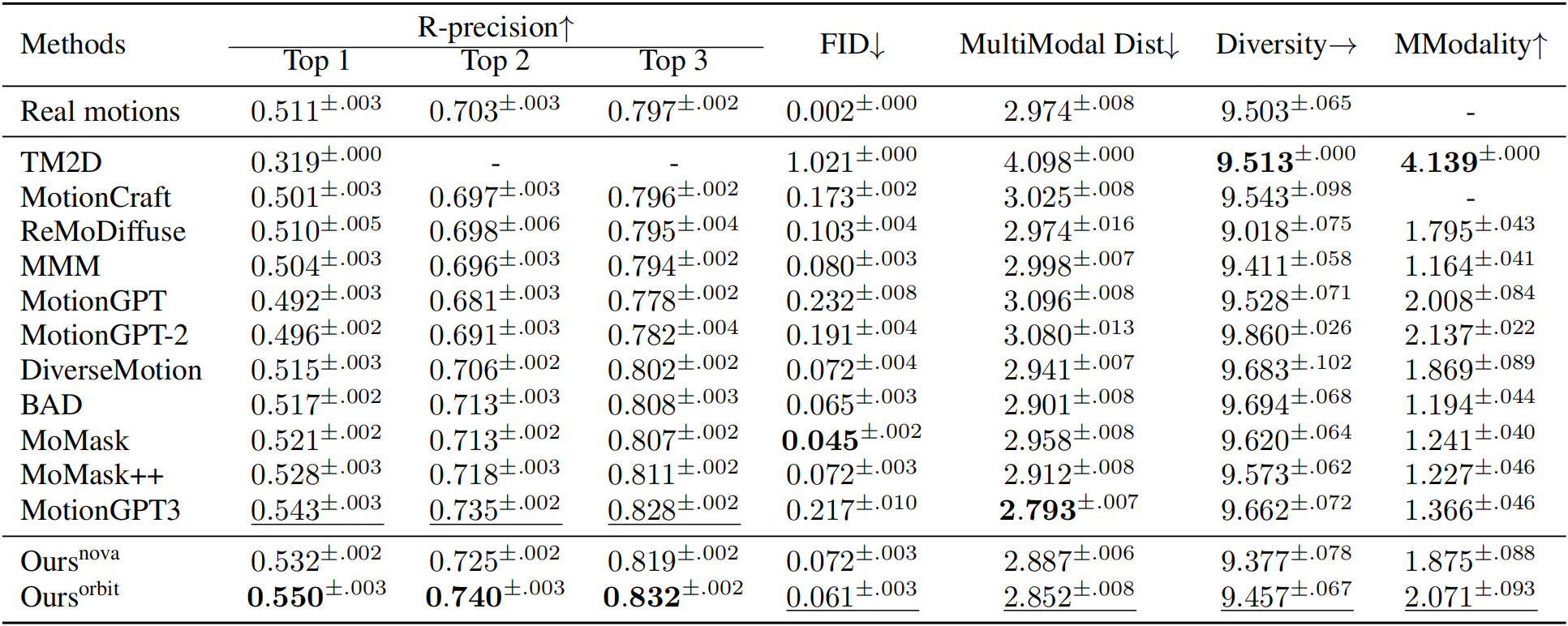
Competitive quantitative performance on SnapMoGen.

Human preference comparison with prior text-to-motion methods.
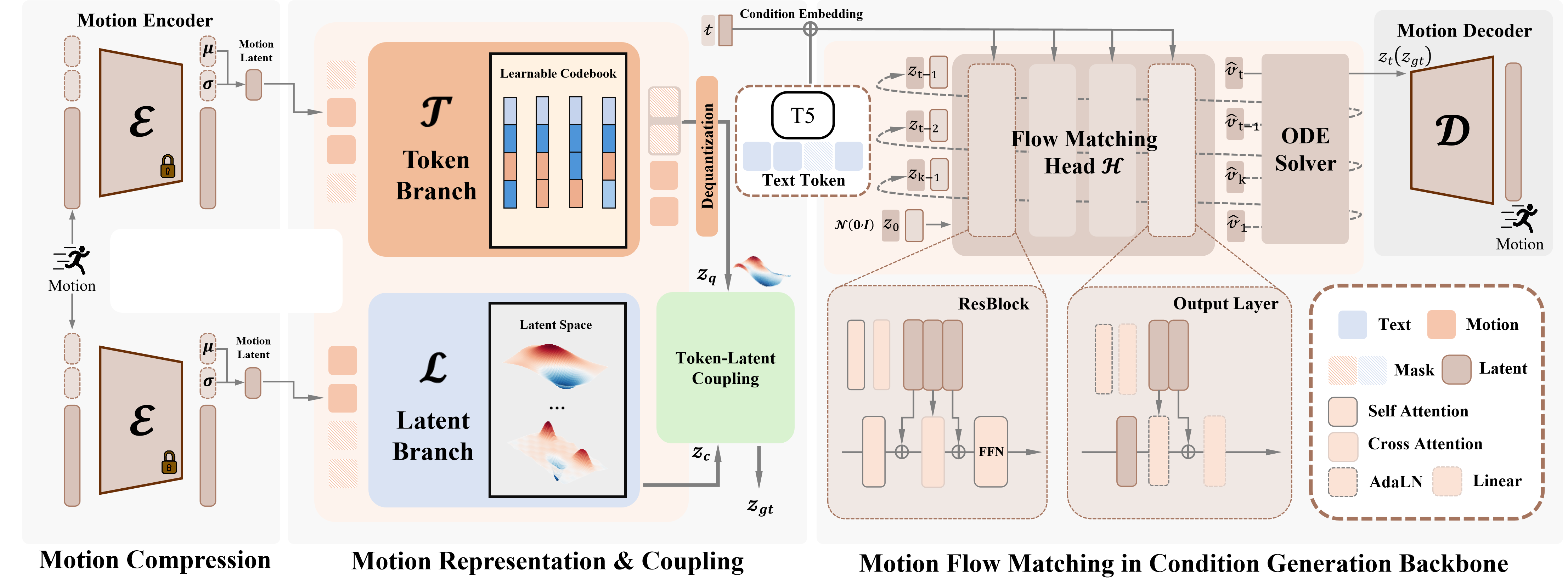
FlowCoMotion combines RVQ-style semantic tokens with continuous motion latents. Multi-view distillation regularizes the latent branch, discrete temporal resolution quantization extracts high-level semantic cues, and a coupling network unifies both representations before text-conditioned flow matching and short ODE integration.
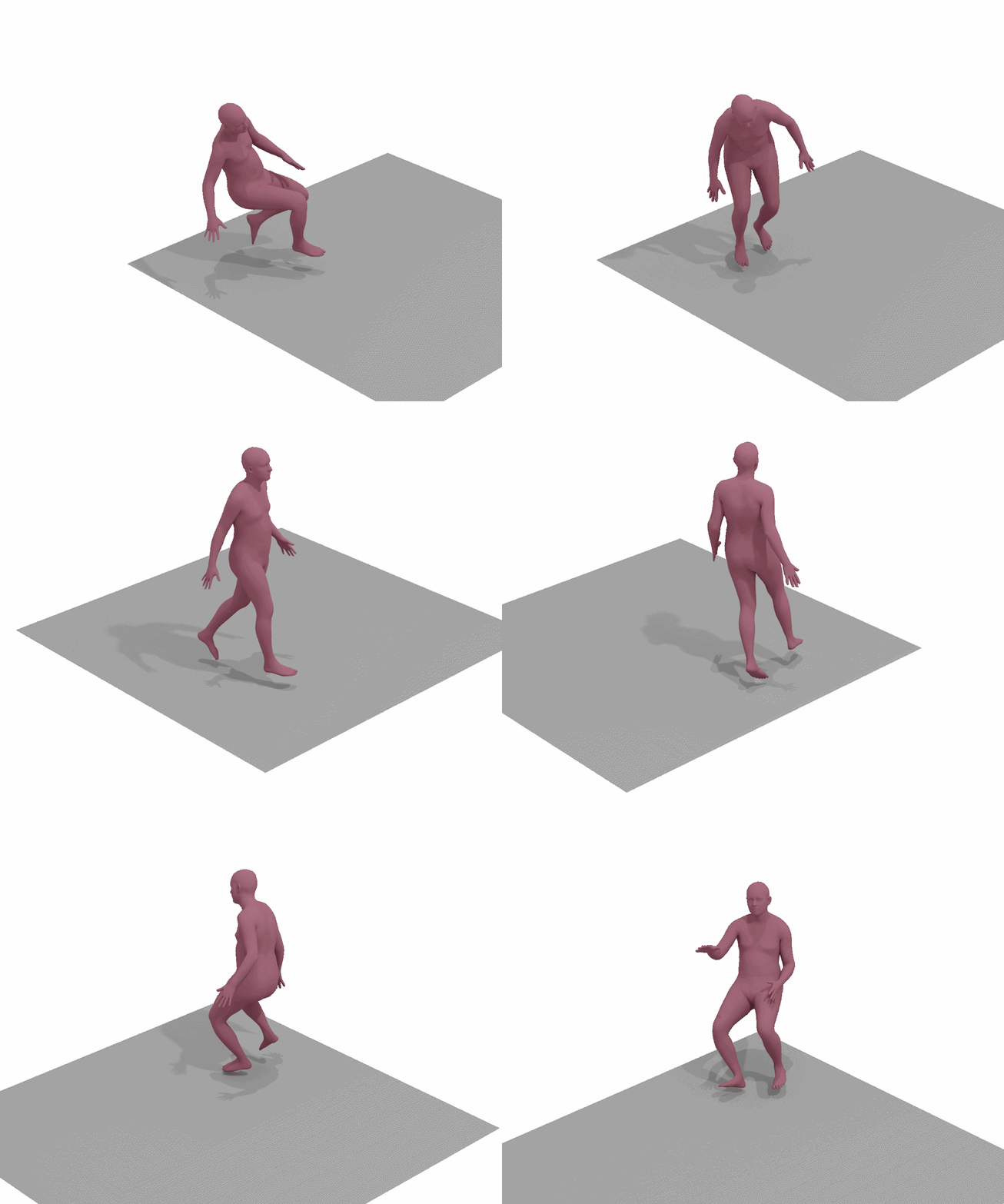
A person quickly puts both hands down while walking in a clockwise half circle, then climbs imaginary stairs with both arms and legs.
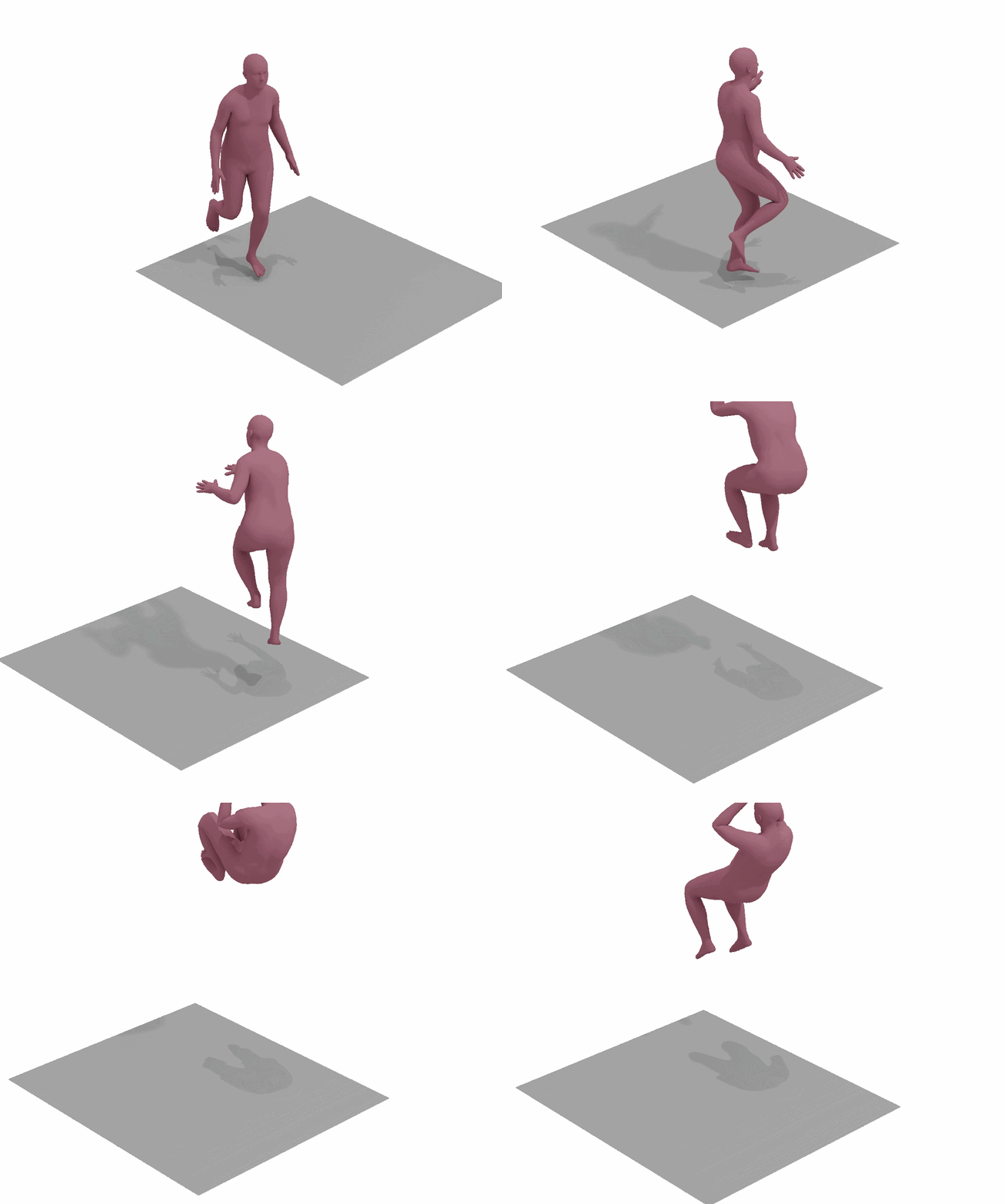
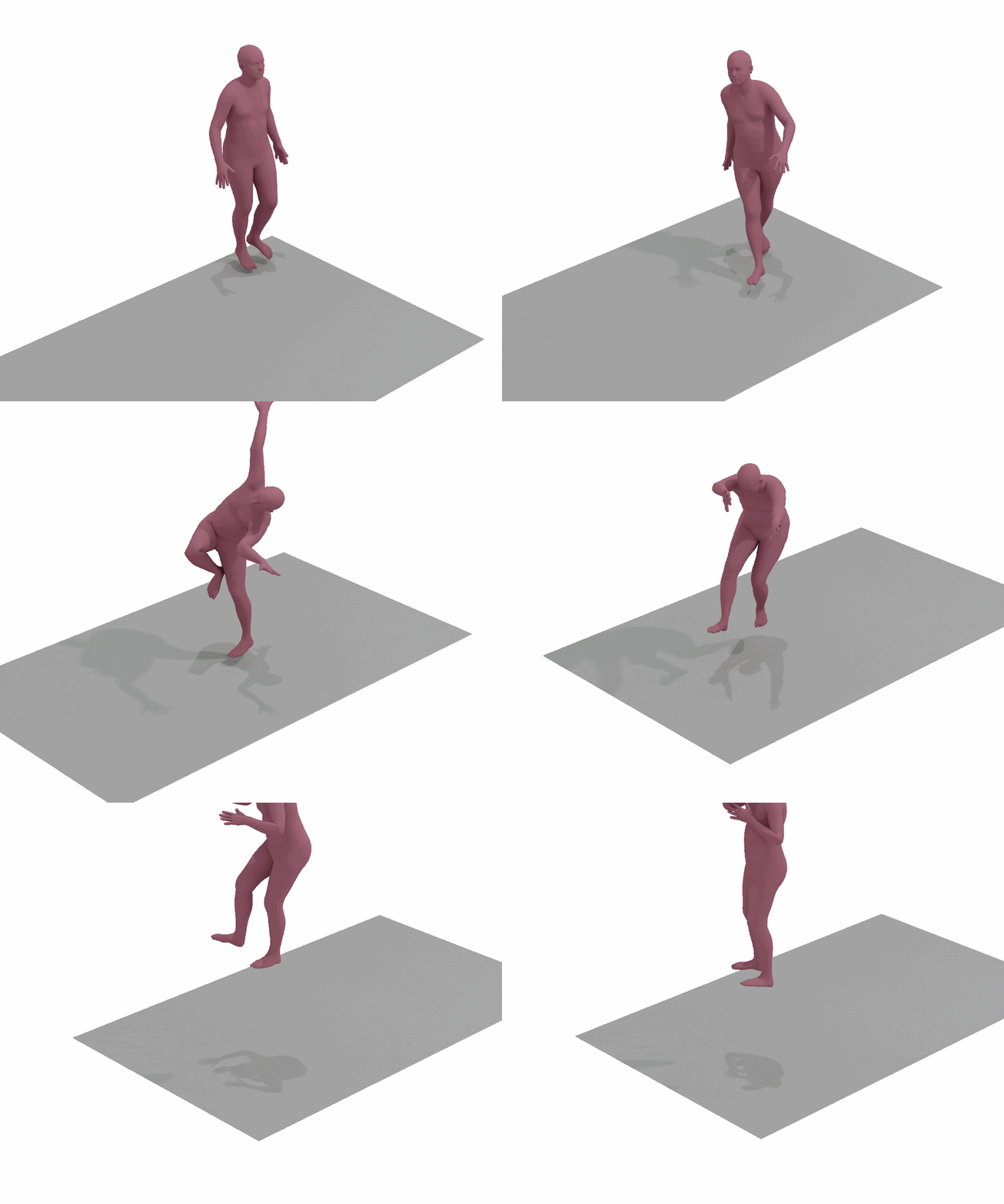
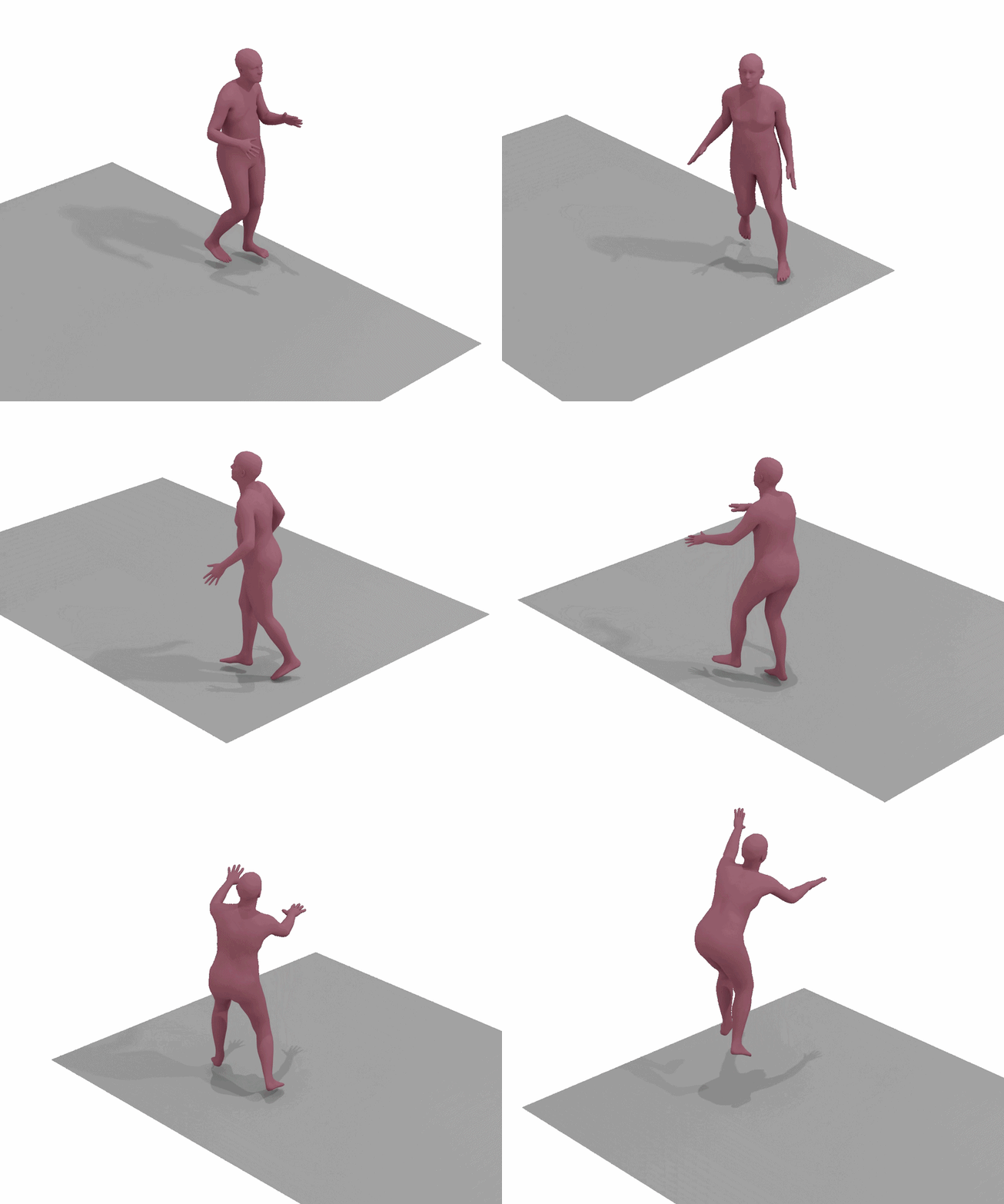
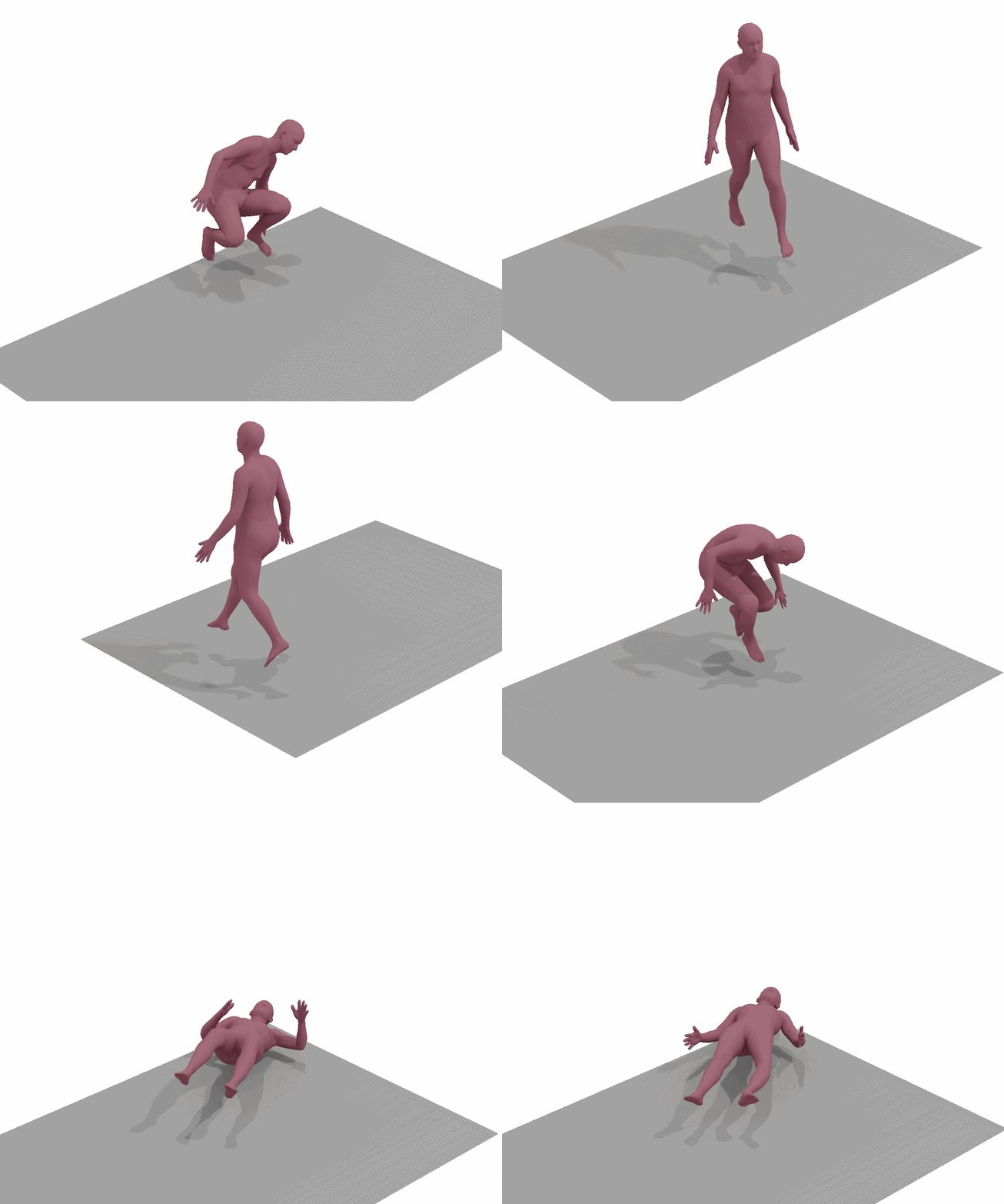
A man gets up from the ground, walks in a counter-clockwise circle, and then lies down flat on his back.
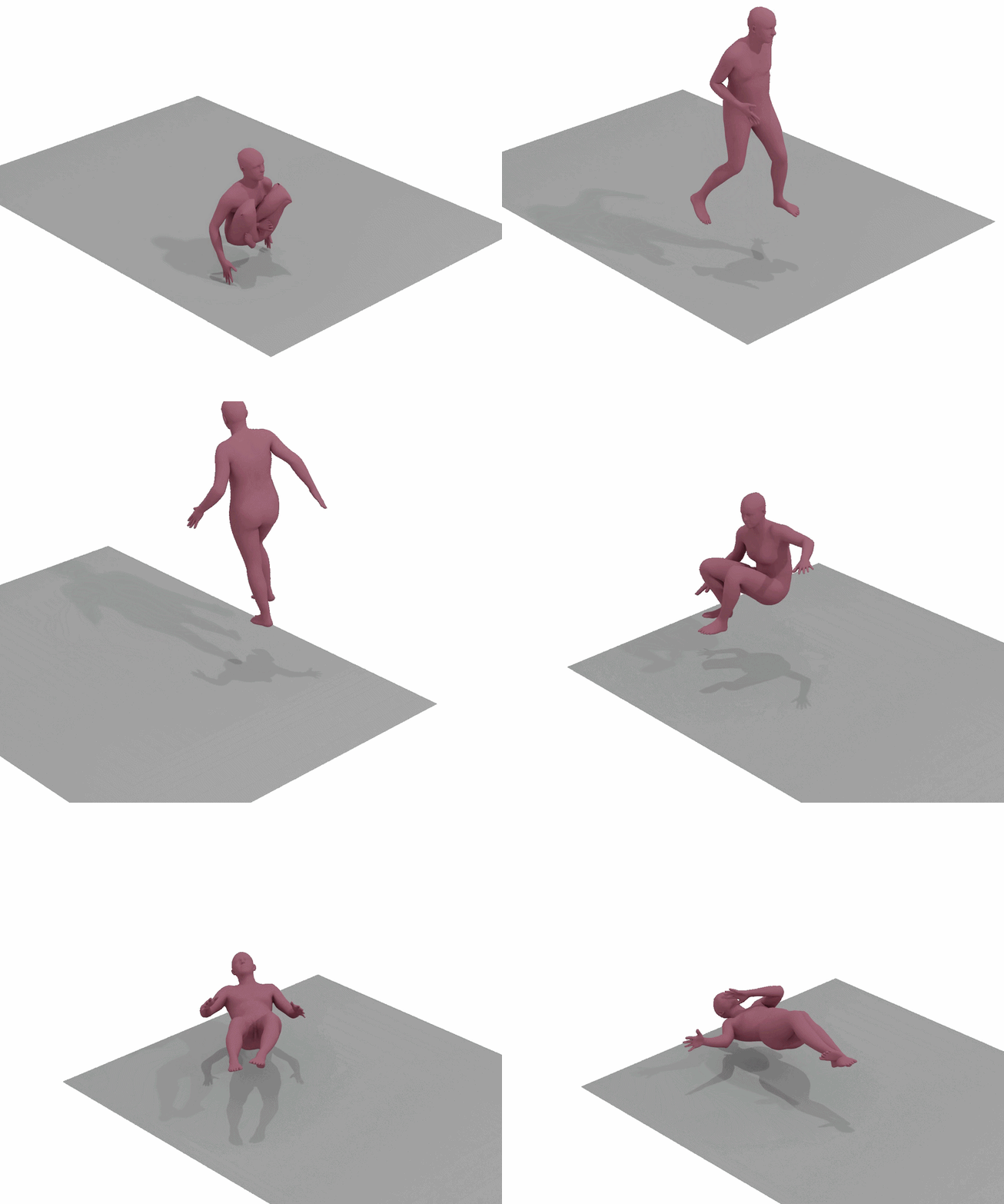
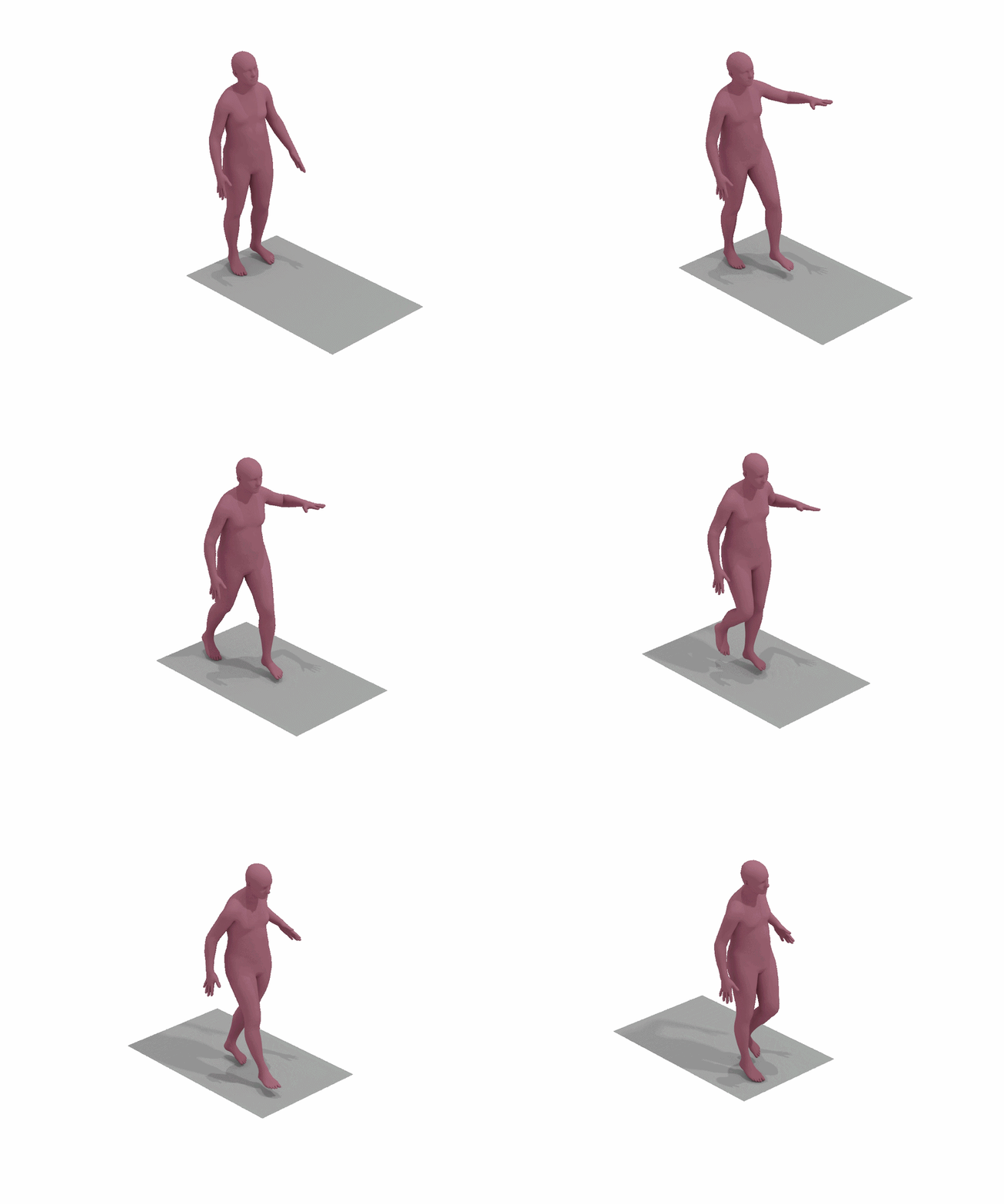
A man walks forward, turns right and then left to return to his starting point and create a figure eight.
@misc{guan2026flowcomotiontexttomotiongenerationtokenlatent,
  title={FlowCoMotion: Text-to-Motion Generation via Token-Latent Flow Modeling},
  author={Dawei Guan and Di Yang and Chengjie Jin and Jiangtao Wang},
  year={2026},
  eprint={2604.11083},
  archivePrefix={arXiv},
  primaryClass={cs.CV},
  url={https://arxiv.org/abs/2604.11083},
}